
 Laser removal
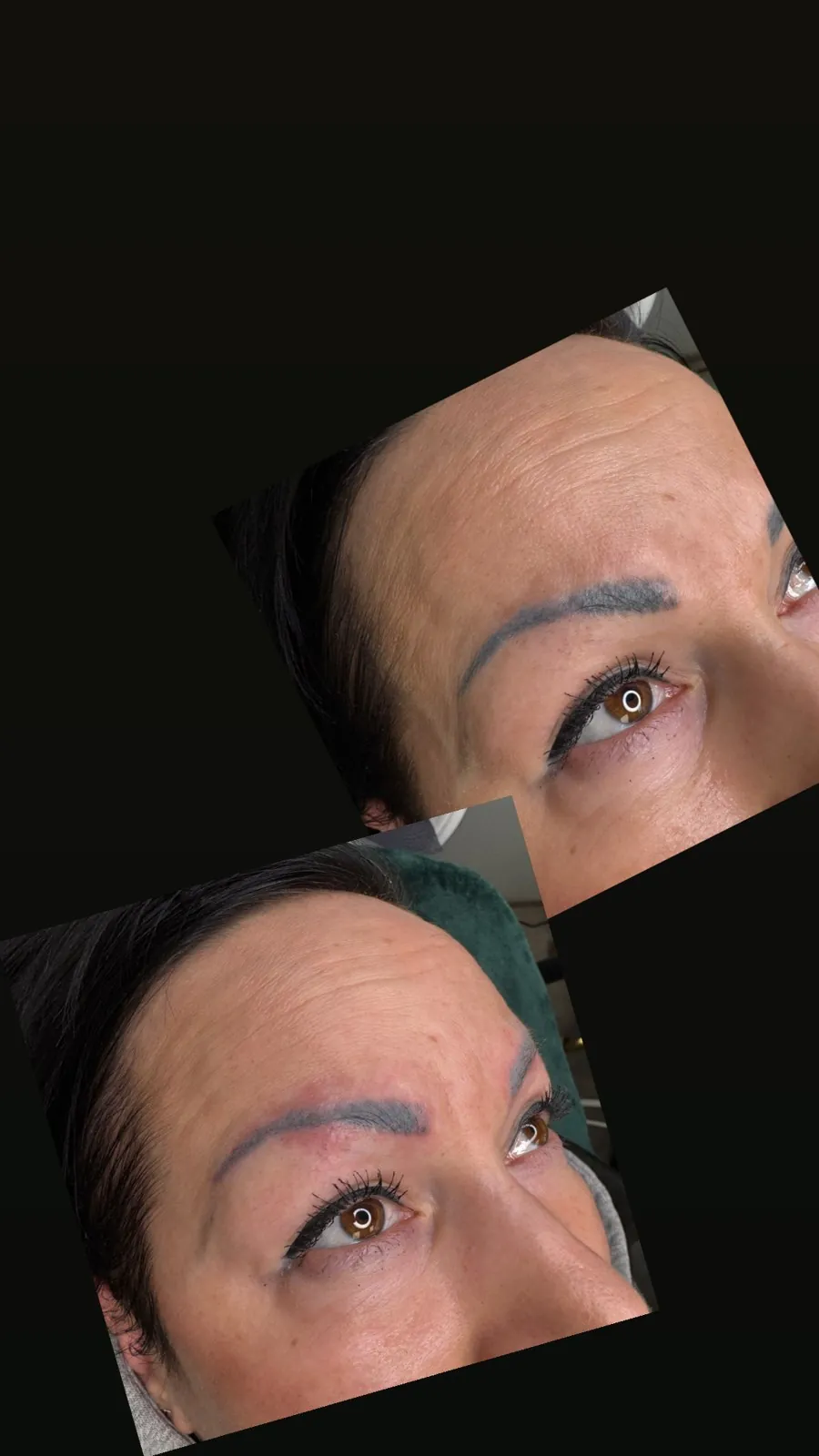
Brow PMU turned blue or grey: why it happens and how to fix it
Blue, grey and greenish brows are the most common reason people come for removal. Here is where the cool tone comes from, why you shouldn't cover it with a corrector and how the laser removes it.
Why brown pigment turns blue
Brown pigment is a mix of several components: black, red and yellow. Over the years the warm components break down and clear faster, while the black, the most durable, stays. Under a layer of skin black looks blue or grey — the same way veins look blue even though blood is red. It's an optical effect: the skin scatters light, and we see a cool tone through it.
The effect gets stronger with:
- pigment placed too deep;
- old carbon- or ink-based pigments;
- tanning and sunbeds without SPF — UV breaks down warm components faster;
- several touch-ups over the old PMU;
- thin or very fair skin, through which pigment shows more.
How to tell it's really blue
Look at your brows in daylight by a window, without makeup. If they look grey-blue, graphite or greenish, especially at the edges, these are remnants of the black base. Under warm artificial light the blue is often barely visible, so judge the colour in daylight.
Sometimes the shadow of thick brow hairs is mistaken for blue. The difference is easy to see at a consultation or even on a photo taken the right way.
Why not just cover it with a warm colour
People often try to cover blue tones with an orange or skin-tone corrector. At first it works: the brows look warmer. But a year or two later the corrector fades and the brows turn grey-ginger or patchy. Now there are two different pigments in the skin at different depths.
Skin-tone and orange correctors also respond poorly to the laser and can darken. So removing such "covered" brows is harder and takes longer. We first remove the blue base and only then do new PMU in warm tones.
How we remove blue brows
Cool tones are the most rewarding task for the laser. The 1064 nm wavelength is well absorbed by dark pigment, so blue and grey brows usually lighten noticeably after the first session. We use a PRIME PLUS PRO Nd:YAG Q-switched laser with a 5–7 nanosecond pulse, so the surrounding skin barely heats up.
| Situation | Method | Sessions |
|---|---|---|
| Evenly blue or grey brows | Laser 1064 nm | 2–3 |
| Blue base + ginger patches from a corrector | Laser, then remover | 3–4 |
| Only a blue tail or edge | Targeted laser | 1–2 |
| Blue under a recent cover-up | Test pulse, then a plan | individual |
What a session looks like
- Assessment and photos under the same light, so progress can be compared.
- A test pulse on a small area to see how the pigment responds.
- Protective eyewear and skin preparation.
- Laser treatment — 10–15 minutes for both brows.
- Cooling and aftercare advice.
What happens to your brows afterwards
Hairs may lighten slightly after a session; they grow back in their own colour, as the laser doesn't damage hair follicles. The skin stays red for 1–2 days, then settles. After 4–6 weeks we do the next session or, if the base is already clear, plan new PMU.
After the first session the blue often turns into a lighter grey or a soft warm tone. That's a normal in-between stage: the pigment clears gradually.
New PMU after removal
New PMU can be done 4–6 weeks after the last laser session. At our studio we do brows in warm shades and choose pigments that won't turn blue over the years. The same artist does both the removal and the new PMU, so the plan is made from the start.
See our artists' work on the ANITA SPACE website and on Instagram.
How to prevent blue tones in future
- choose an artist who uses modern pigments at the right depth;
- use SPF on your brows in summer;
- avoid yearly "refreshes" over old PMU unless needed;
- if the colour starts to change, come in early — a light remnant is easier to remove.
FAQ
Can blue tones be removed with a remover?
Yes, but for cool dark shades the laser is usually more effective and gives a more even result. We keep the remover for warm remnants and targeted work.
Will the laser turn my brows brown again?
The laser doesn't change the colour; it clears the pigment. After removal you can get new PMU in the shade you want.
Do I need to remove the blue if I'm planning new PMU?
Yes. New brown pigment over blue gives a muddy grey-brown. We lighten the base first.
Will the laser make my brow hairs fall out?
No. A Q-switched laser doesn't damage hair follicles. Hairs may lighten temporarily but grow back in their own colour.
Not sure whether it's blue or just the shadow of your hairs? Take a photo of your brows in daylight by a window and send it to us. We'll tell you whether removal is needed.
More on choosing a method in the article "Laser or remover"; prices are on the prices page.